Decking Failure In First
Decking failure in First Colony shows as a sag between rafters or a soft, spongy feel underfoot for the crew. Inside, the stain spreads wide instead of dripping from one point.
Emergency roof repair in First Colony starts the moment water crosses the ceiling line. Older roof decking softens after years of heat and moisture cycling. My Houston Roofer connects First Colony, Sugar Land callers with an independent roofing specialist for urgent roof help. Call (619) 775-3787 now.First Colony sits in one of the metro's hail corridors. Water moves through roof layers in hours, not days, so an early call protects the decking. Pristine exteriors hide punctured shingles until the ceiling stains.
Call about an First Colony roof (619) 775-3787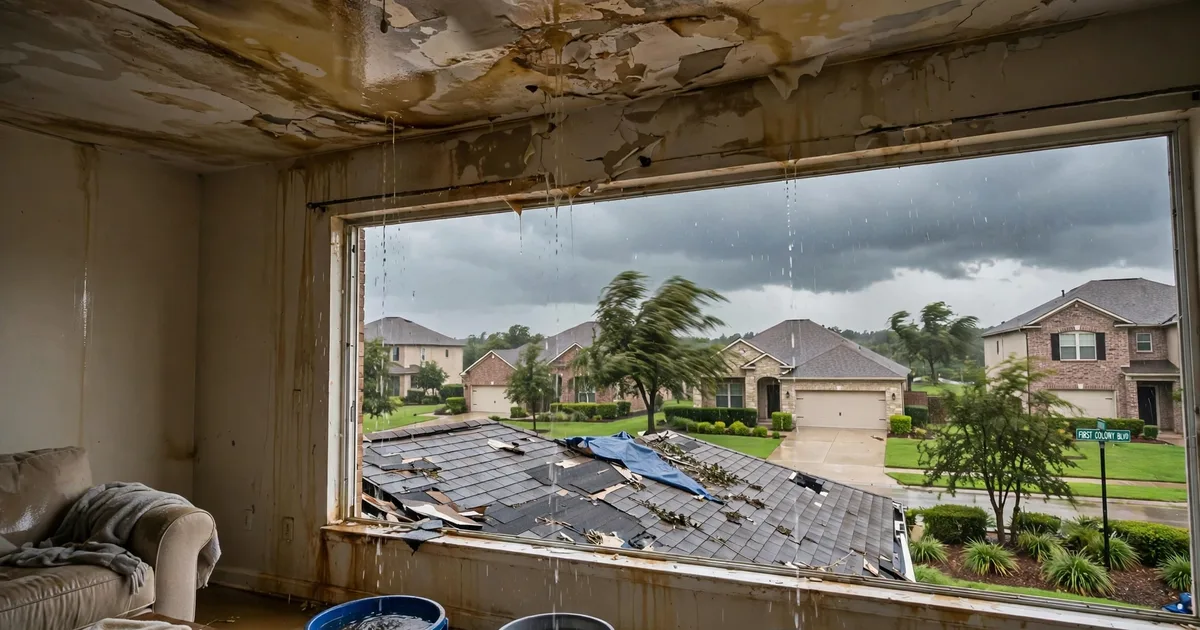
Call (619) 775-3787 now for a roof emergency in First Colony. My Houston Roofer is a connection service: the call team takes the address, the location of the water entry, when the damage appeared, and the roof type when known, then matches the call with an independent roofing specialist serving Sugar Land.
Dispatch prioritizes active water entry. A ceiling drip during rain outranks a missing tab with no leak, because stopping water comes first. Say the words "water is coming in" when it is true: those words move the First Colony call to the front of the queue.
My Houston Roofer connects callers; the independent specialist performs the work. That split keeps the process honest for First Colony homeowners: one team routes the emergency, the roofer on the roof handles the repair.
Summary: One call starts the two-stage process for First Colony: stop the water, then fix the roof.
A roofing emergency in First Colony is active water entry through the roofing system. Older roof decking softens after years of heat and moisture cycling. Soft spots in the decking let water push through under shingle layers that still look sound.
Decking failure in First Colony shows as a sag between rafters or a soft, spongy feel underfoot for the crew. Inside, the stain spreads wide instead of dripping from one point.
For First Colony, the same emergency standard applies across the city: see emergency roof repair in Sugar Land for the full Sugar Land service picture.
A slow seep in First Colony that stops when the rain stops still needs repair, but it differs from water pouring in during a storm. Emergencies get tarps; non-emergencies get scheduled repair visits.
Before help arrives in First Colony, protect the interior and document the damage. The crew handles the roof; the homeowner handles everything under it.
Do not attempt a DIY tarp on the damaged First Colony slope. Emergency tarps need secure anchoring and safe roof access, both jobs for the crew with the right equipment.
Summary: Call now, contain the water inside, and let the specialist handle the First Colony roof.
The Sugar Land page covers city-wide emergency roof repair topics, pricing factors, and scheduling for every neighborhood including First Colony.
The same emergency roof repair service covers these nearby neighborhoods. Each area page details local roofing concerns.
An active leak needs the visible symptom, timing and recent weather described clearly by phone.
First Colony emergency roof repair questions focus on response speed, what to do before help arrives, and tarping.
Permanent repairs need dry decking, so steady rain pushes the repair day out. Tarping happens between rain bands whenever crews reach the roof safely. In First Colony, the tarp goes on first and the repair follows at the first dry window.
Secure the roof first in First Colony, then call the insurer. Emergency mitigation protects the claim instead of hurting it, and the specialist documents the damage for the adjuster.
A properly secured tarp protects a First Colony roof for several weeks, long enough to schedule the permanent repair. It is temporary protection by design: sun and wind wear the sheeting down, so the repair plan moves forward without delay.
Have the street address, water entry rooms, damage start time, and photos ready for the First Colony call. Known roof age and material sharpen the triage further. Five facts, one faster dispatch.